
How to measure badminton smash speed: 120fps smartphone method vs radar & drag decay
You can measure badminton smash speed accurately without expensive tournament cameras by filming perpendicular to the net at 120fps–240fps and dividing known court distance (such as the 1.98 m short service line span) by elapsed frame count. Because natural feather shuttlecocks have an exceptionally high aerodynamic drag coefficient, initial launch speed drops by roughly 60%–70% before crossing the net—making shuttlecock speed grade and feather integrity crucial to consistent testing.
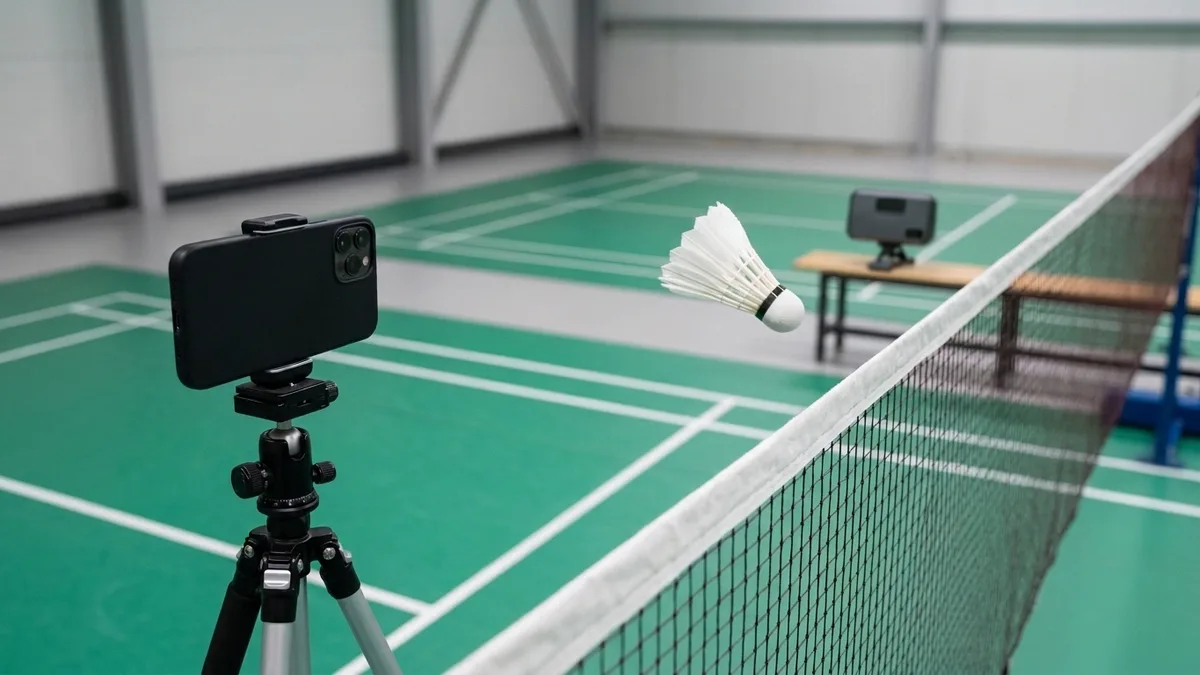
Badminton smash speed measurement methods compared
Accuracy, setup cost, calibration requirements and best use cases for clubs, coaches and badminton festivals.
| Measurement method | Typical cost | Accuracy (first 2 m) | Calibration requirement | Best club / coach use |
|---|---|---|---|---|
| 240fps smartphone + frame counter | Free (existing phone) | ±5%–8% (average over 1.5 m) | Known court line span (1.98 m) + level tripod | Coaching clinics, club speed challenges |
| 120fps smartphone slow-motion | Free (existing phone) | ±8%–12% (fewer frames) | Side-view tripod at net height + bright hall | Quick player benchmarks & social reels |
| Portable Doppler sports radar | USD 100–350 | ±2%–4% (instant peak) | Aim within 10° of flight path behind net | Club carnivals, academies & demo booths |
| Audio peak impact-to-wall timer | Free mobile app | ±12%–20% (average speed) | Exact player-to-target distance (3–5 m) | Casual distance-averaged training drills |
| Broadcast high-speed optical array | Tournament system | ±1% (instant off-strings) | Multi-camera court triangulation | International pro arenas only |
Step-by-step free 240fps smartphone smash speed setup for clubs
Badminton clubs and academy coaches routinely run smash-speed challenges during open days. Proper camera geometry eliminates perspective error.
Step 1: Place a tripod perpendicular at net level
Mount the phone on a sideline tripod 4–5 m back from the singles sideline, centered on the net post so the shuttle moves horizontally across the frame rather than toward or away from the lens.
Step 2: Shoot at 240fps (or 120fps) under steady hall lights
Higher frame rates reduce motion blur on fast strikes. If LED hall lights flicker at 240fps, switch to 120fps and keep shutter speed synced to local mains frequency (1/120 s or 1/100 s).
Step 3: Count frames over the first 1.5–2.0 m after contact
Because drag slows a feather shuttle rapidly, measuring across a full 6 m court understates peak smash speed by half. Use the 1.98 m short-service-to-net marker right after contact for fair readings.
Why shuttlecock speed grade and feather condition change radar readings
Two players hitting with identical swing power can record very different speeds if one uses a frayed training duck shuttle and the other uses a fresh tournament goose model.
Feather drag vs nylon skirt deformation
Natural feather skirts maintain a rigid 65–68 mm cone at launch and slow rapidly after the net for sharp drop angles. Nylon skirts compress inward at high smash speeds, producing a flatter trajectory with different deceleration.
Speed 76 vs 77 vs 78 on identical swings
Heavier Speed 78 shuttles carry slightly more momentum through cool dense air than Speed 76, giving noticeably higher mid-court retained speed during winter club speed contests.
Use fresh calibrated models for club speed events
For repeatable academy testing or open-day radar booths, stock fresh tournament goose models (such as G10, GL-1 or White Goose No.3) stored at 55%–65% RH so every participant tests on equal footing.
Catalog models featured in this guide
Compare indicative USD EXW reference pricing per tube, save models to your inquiry list, or request 3 free play-test shuttlecocks.

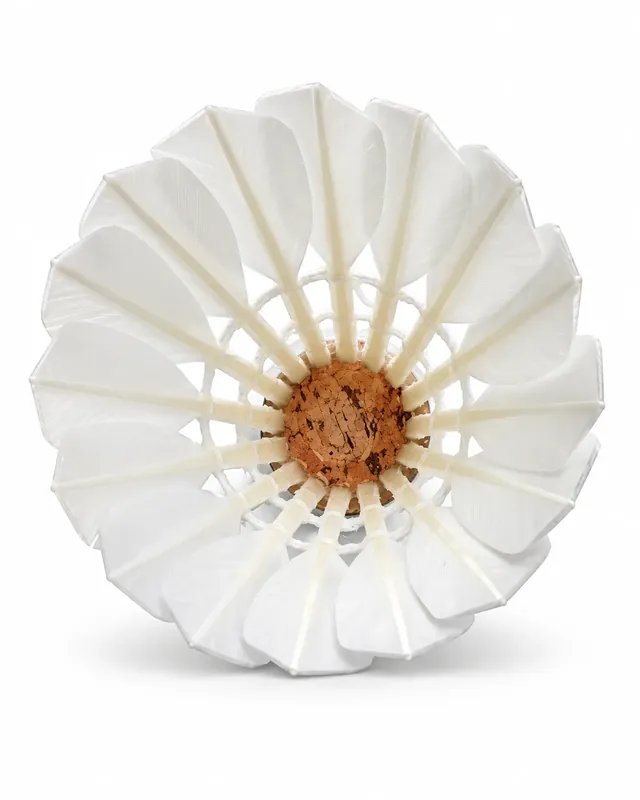

Club & Practice shuttlecock
WHITE GOOSE NO.3
Goose feather
- Min. order
- 1 tube
- Packing
- 12 pcs / tube

Badminton smash speed & aerodynamics FAQ
Can I measure badminton smash speed accurately with a normal smartphone?
Yes. Recording perpendicular to the court at 240fps on a tripod and counting frames over the first 1.5–2.0 m after racket impact gives readings within about ±5%–8% of portable radar units.
Why is the speed across the net much lower than off the strings?
A badminton shuttlecock has one of the highest aerodynamic drag-to-mass ratios in sport—it loses 60%–70% of its initial speed within a few meters after leaving the strings.
Does shuttlecock speed number (76, 77 or 78) affect measured smash speed?
Launch speed off the strings is similar, but heavier Speed 78 shuttles retain more momentum in cool air and show higher radar readings measured at mid-court or behind the net.
Which shuttlecocks should clubs use for radar speed challenges or coaching tests?
Use fresh, unfrayed straight goose feather models (such as G10, GL-1 or White Goose No.3) conditioned at 55%–65% RH, or request 3 free factory samples (buyer pays courier costs) to calibrate your test bench.
Continue reading related factory guides
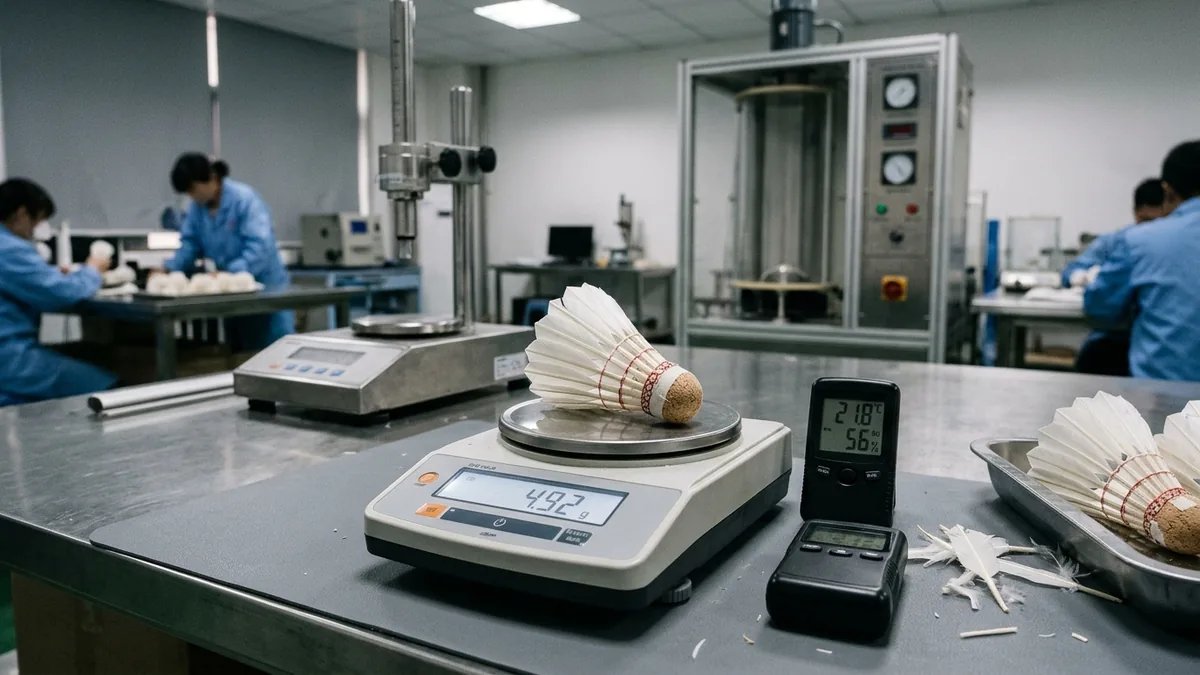
Shuttlecock speed chart (74–79): temperature, altitude and baseline test guide
Use our factory shuttlecock speed chart (74–79) to match court temperature, altitude and air density, plus how to run the BWF baseline landing test.

Shuttlecock speed conversion chart: 1–5 scale, cap colors & 74–79 ratings by country
Convert 1–5 speed ratings and green/blue/red cap labels to 74–79 factory shuttlecock speeds, with winter and summer recommendations for 16 countries.
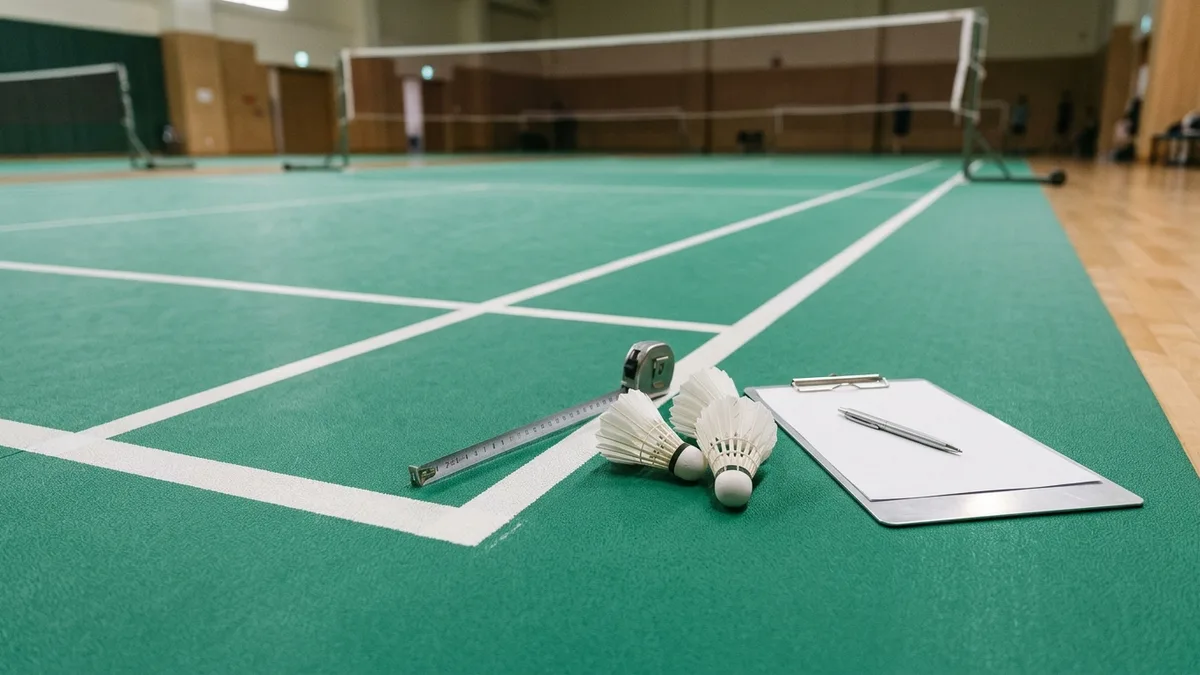
How to evaluate shuttlecock factory samples: blind flight test & 100-point court scorecard
Step-by-step B2B blind play-test scorecard and official 530–990 mm baseline landing test to evaluate feather shuttlecock samples before bulk wholesale orders.